How to Choose and Find a Private Tutor
A practical guide for Malaysian parents choosing a private or home tutor based on learning gaps, teaching style, progress tracking, reliability, and fit.
8 min read

Choosing the right tutor is not just about finding someone who knows the subject. It is about finding someone who can understand your child's learning gaps, explain clearly, build confidence, and help your child improve over time.
If you are searching for find private tutor or find home tutor options in Malaysia, start with three questions: What does my child need help with? What kind of teaching style works for them? How will we measure progress?
This guide is for Malaysian parents who want a practical way to choose a tutor for school subjects, exam support, confidence building, or better study habits.
Key takeaways
| What to check | Why it matters | What parents should ask |
|---|---|---|
| Subject fit | A good tutor must know the syllabus and topic | Which levels and subjects do you teach best? |
| Teaching style | Your child must understand the explanation | How do you explain difficult topics? |
| Diagnosis | The tutor should find the real learning gap | How will you assess my child first? |
| Progress tracking | Parents need to know if lessons are working | How will you update me? |
| Personality fit | Confidence affects learning | How do you handle quiet or unmotivated students? |
| Safety and reliability | Home tutoring needs trust | How are tutors screened? |
| Schedule and format | Lessons must be sustainable | Do we need home, online, or hybrid lessons? |
Why choosing the right private tutor matters in Malaysia
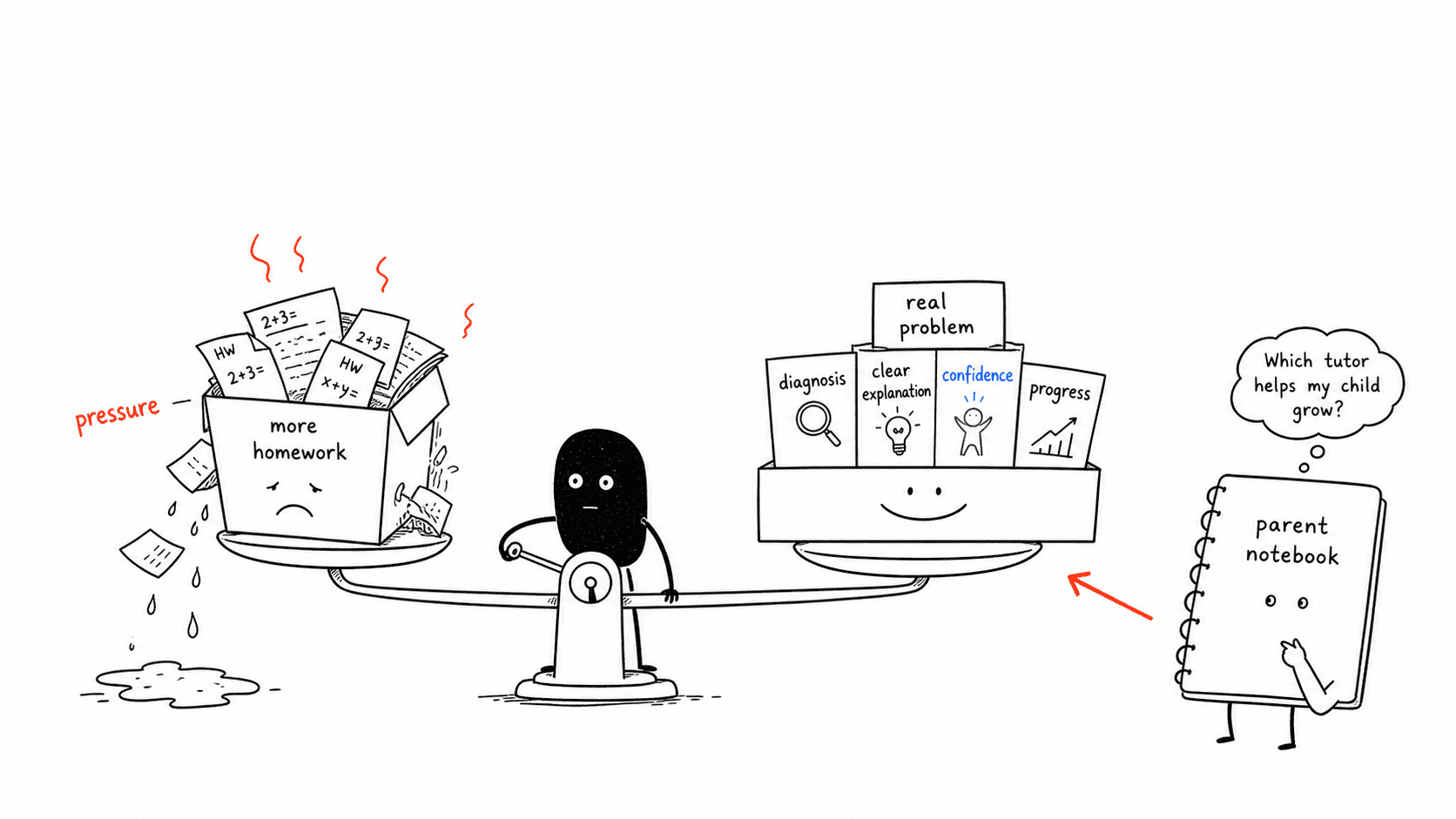
Private tutoring is already part of how many Malaysian families support their children's education. A Malaysia-focused study on private tutorial learning notes that many families spend part of their income on private tutoring fees, especially parents living in urban areas.
That does not mean every child needs tuition. It means parents should choose carefully. The wrong tutor can add pressure without solving the real problem. The right tutor can help a child understand weak topics, rebuild confidence, and study with better structure.
Malaysia's Programme for International Student Assessment (PISA) 2022 results also show why academic foundations matter. The Ministry of Education Malaysia reported average scores of 409 for mathematical literacy, 416 for scientific literacy, and 388 for reading literacy. These numbers do not describe every child, but they show that many students may benefit from more targeted support in core subjects.
The right tutor should help your child understand weak topics, build exam technique, improve study habits, ask better questions, gain confidence, reduce careless mistakes, and learn how to solve problems step by step.
A tutor should not simply give more homework. The real value is in diagnosis, explanation, feedback, and accountability.
Step 1: Identify your child's real learning gap
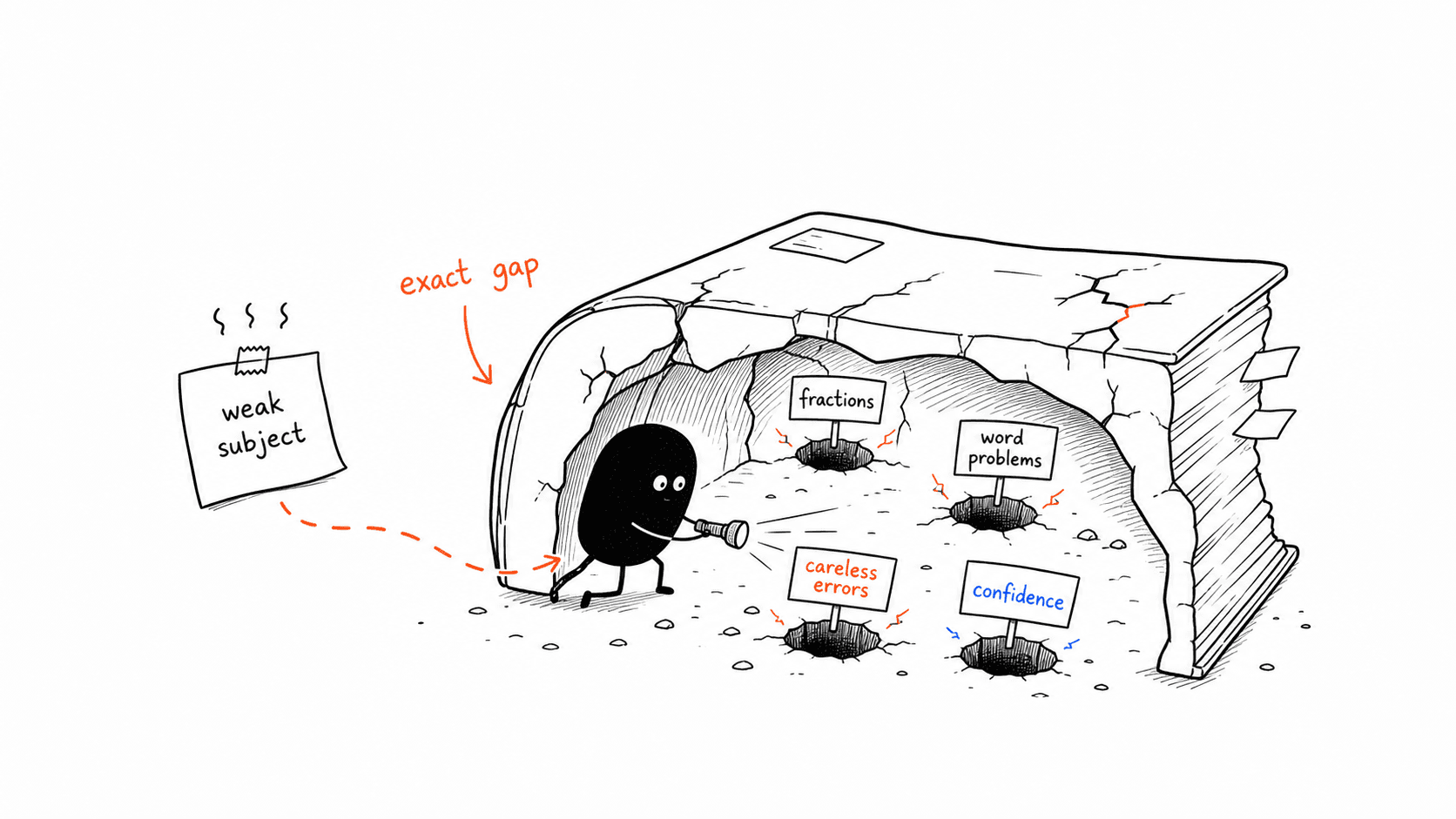
Before you hire anyone, define the problem clearly.
Many parents say, "My child is weak in Maths" or "My child needs English tuition." But that may be too broad. A child who is weak in Maths may struggle with fractions, algebra, careless mistakes, exam pressure, or reading word problems.
To choose a private tutor, first identify your child's exact learning gap, then check the tutor's subject fit, teaching style, progress tracking, reliability, and ability to build confidence. The best tutor is not always the most qualified on paper; it is the one who can help your child understand, practise, and improve consistently.
If you do not know how to identify the learning gap yet, do not worry. Tutorly tutors are trained to help spot whether the issue is understanding, confidence, exam technique, or study habits.
- Is my child failing the subject?
- Is my child passing but not improving?
- Does my child understand in class but make mistakes in exams?
- Is the problem discipline, confidence, or understanding?
- Does my child need short-term exam help or long-term foundation work?
| Child's problem | Best tutor focus |
|---|---|
| Weak foundation | Slow explanation and topic rebuilding |
| Careless mistakes | Checking habits and exam discipline |
| Low confidence | Encouraging tutor with patient feedback |
| Strong student stuck at B/A- | Exam strategy and higher-order questions |
| Poor writing | Structure, vocabulary, and idea development |
| Lack of motivation | Accountability and visible progress |
Step 2: Choose the right type of tutor
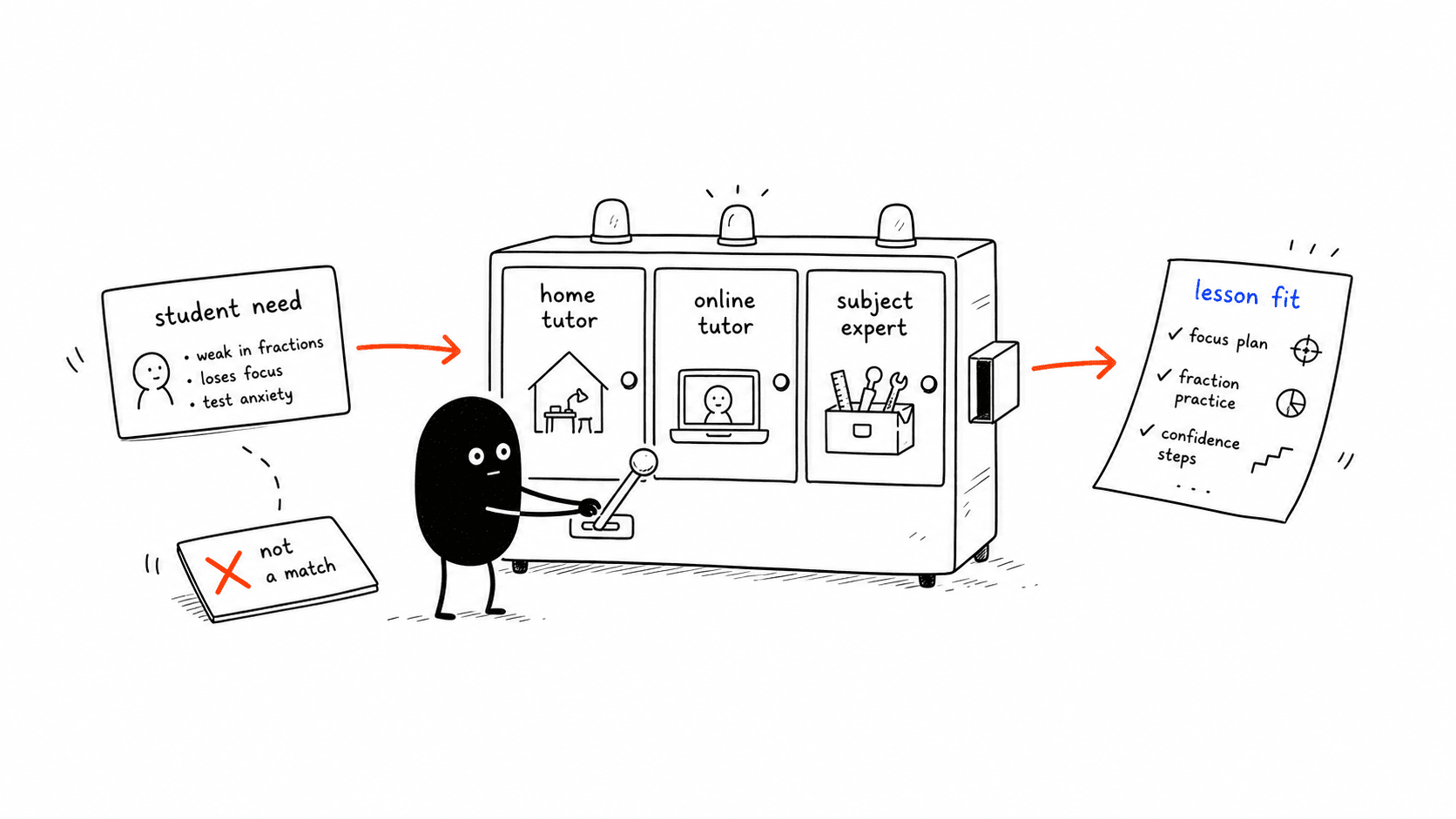
When parents search to find a home tutor, they usually compare home tutoring, online tutoring, and tuition centres. For Tutorly, the main focus is private tutoring, which gives families more personal support than large-group classes.
Home tutor
A home tutor teaches your child at your house. This is useful for younger students, easily distracted children, and parents who want closer supervision.
- Primary school students
- Students who need structure
- Children who learn better face to face
- Parents who want lessons at home
Online private tutor
Online tutoring can work well for older students, busy families, and subjects that can be taught through shared screens, digital notes, or online worksheets.
Malaysia's Ministry of Education has also placed more focus on digital education. Its Digital Education Policy outlines 4 objectives, 6 pillars, 18 strategies, and 41 initiatives to support digital education and reduce the digital divide.
This does not mean online learning is always better, but it shows why students need to become comfortable with both physical and digital learning formats.
- Secondary students
- Exam revision
- English writing feedback
- Maths and Science explanation
- Families with tight schedules
- Students comfortable learning on screen
Subject specialist tutor
A subject specialist is useful when the child needs deeper help in one area, such as Additional Mathematics, Physics, Chemistry, English writing, Bahasa Melayu, or Sejarah.
- Exam-year students
- Students targeting higher grades
- Students with one clear weak subject
- Students who need structured revision
- Students preparing for SPM, IGCSE, or other major exams
Step 3: Ask the right questions before hiring
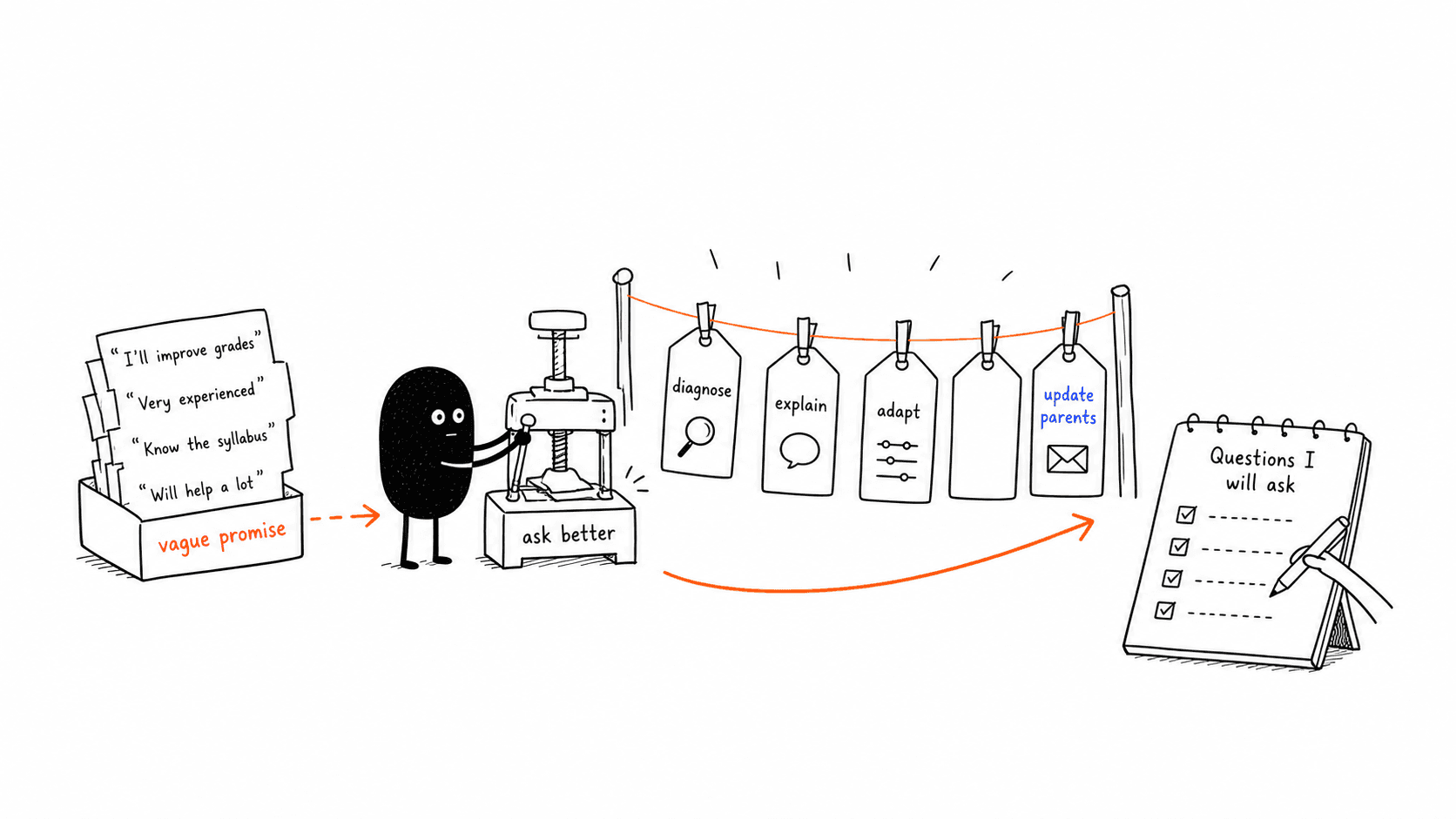
A short conversation before hiring can save months of poor fit.
Good tutors answer specifically. Weak tutors give vague answers like "I will help them improve" without explaining how.
Parents should also ask how the tutor handles feedback. If your child does not understand a topic after the first explanation, the tutor should be able to explain it another way.
- Which subjects and levels do you teach best?
- How do you assess a student in the first lesson?
- How do you explain difficult topics?
- How do you handle students who are shy or unmotivated?
- How do you update parents on progress?
- What homework or practice do you usually give?
- How do you prepare students for exams?
- Do you follow the school syllabus?
- Can you adapt if my child learns slowly?
- What should we expect after four lessons?
Step 4: Check teaching style, not just qualifications
Qualifications matter, but teaching style matters too.
A tutor may know the subject well but struggle to explain it simply. Another tutor may be less decorated but better at helping a child feel safe enough to ask questions.
Malaysia's education direction is not only about exam performance. The Ministry of Education's Digital Education Policy is designed to support students, educators, education leaders, and stakeholders in using digital education more effectively.
A good tutor should fit this broader direction by helping students become more independent, adaptable, and confident learners.
This is especially important now because students have access to more digital tools, online notes, videos, and AI tools. The tutor's job is not just to give answers. The tutor should teach the child how to understand, check, and apply what they learn.
- Explains at your child's level
- Asks your child to think, not just copy
- Checks understanding before moving on
- Gives useful corrections
- Encourages your child without lowering standards
- Uses examples your child can understand
- Summarises what was learned
Step 5: Track progress after lessons start
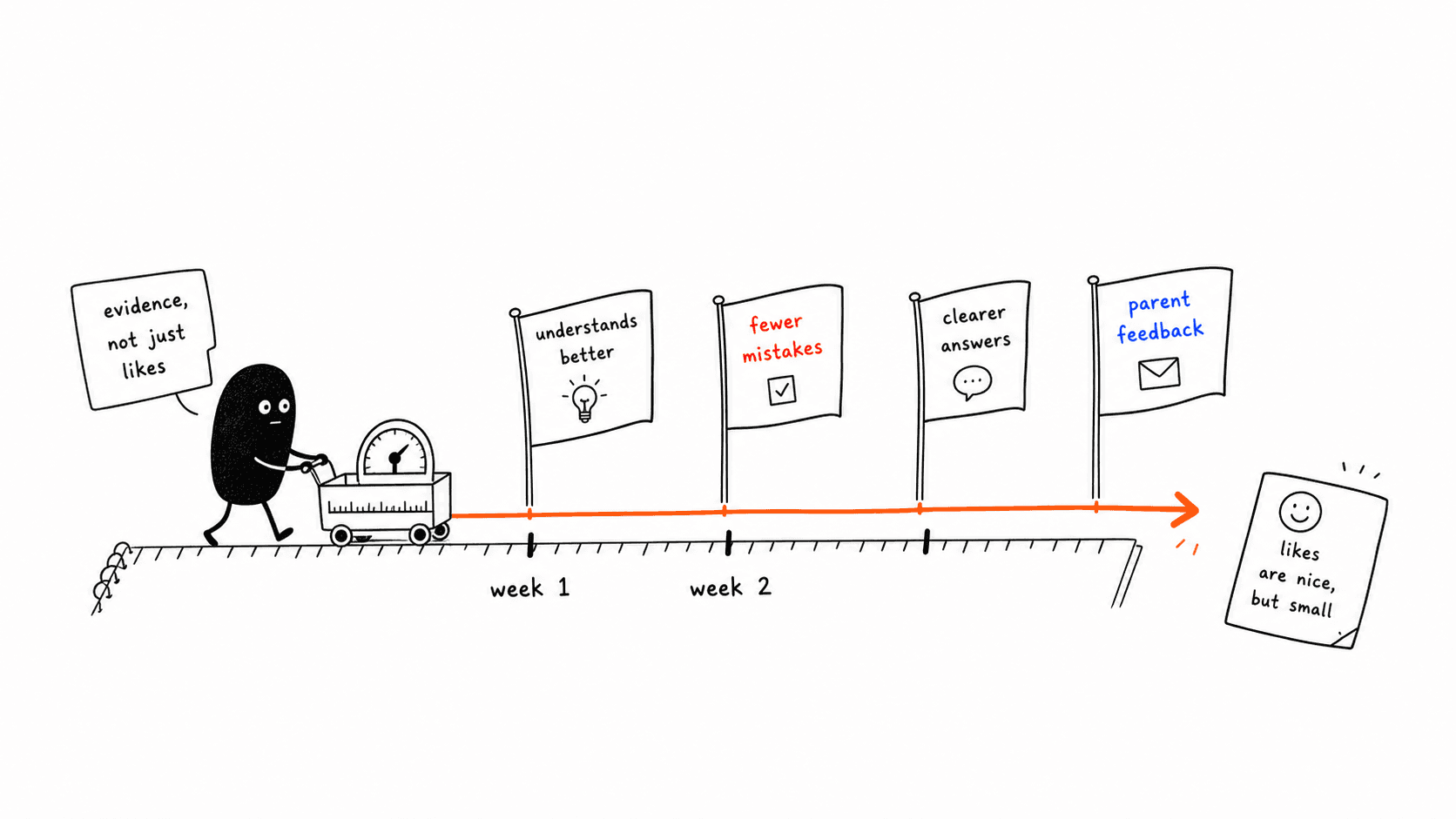
Do not judge a tutor only by whether your child likes the class. Liking the class helps, but progress needs evidence.
A good tutor should be able to tell you what has improved, what is still weak, and what the next plan is.
- Does your child understand topics faster?
- Are mistakes reducing?
- Is homework quality improving?
- Can your child explain concepts more clearly?
- Are test results improving?
- Is your child more willing to ask questions?
- Does the tutor give clear feedback to parents?
| Week | Topic covered | What improved | Still weak | Next action |
|---|---|---|---|---|
| Week 1 | Fractions | Can simplify basic fractions | Word problems | Practise 10 questions |
| Week 2 | Word problems | Better at identifying keywords | Speed | Timed practice |
| Week 3 | Mixed questions | Fewer careless errors | Exam confidence | Mini test |
| Week 4 | Review | More independent | Harder questions | Increase difficulty |
Conclusion
The best tutor for your child is not just someone who can teach the subject. It is someone who can identify the real learning gap, explain clearly, build confidence, and show steady progress.
If you want to find a private tutor or find a home tutor in Malaysia, use a clear checklist before making a decision. Start with your child's needs, check the tutor's teaching style, and track progress after lessons begin.
Tutorly helps Malaysian parents connect with private tutors who can support school performance, study habits, confidence, and long-term learning.
Areas Tutorly serves in Selangor and Kuala Lumpur
Tutorly has private tutors who serve families across key areas in Selangor and Kuala Lumpur. This is useful for parents who prefer a tutor near home or want tutoring support that fits their child's school schedule, location, and learning needs.
Tutor availability may vary by subject, level, schedule, and exact location. If you are looking for a private tutor in one of these areas, Tutorly can match your child with a tutor based on learning needs, preferred lesson format, and location.
Common coverage areas include Petaling Jaya, Damansara, Kota Damansara, Ara Damansara, Subang Jaya, USJ, Bandar Sunway, Puchong, Shah Alam, Klang, Kajang, Bangi, Semenyih, Ampang, Cheras, Rawang, Selayang, Cyberjaya, Seri Kembangan, Bangsar, Mont Kiara, Sri Hartamas, TTDI, Desa ParkCity, Kepong, Sentul, Setapak, Wangsa Maju, Bukit Jalil, Sri Petaling, Taman Desa, OUG, Kuchai Lama, Brickfields, KLCC, and Bukit Bintang.
Frequently Asked Questions
Ready to find a private tutor in Malaysia?
Share the student's subject, level, location, schedule, and learning gap. Tutorly will help introduce a suitable private tutor.
Find a private tutor in MalaysiaExternal Links
- Ministry of Education Malaysia Digital Education Policy
Supports Malaysia's digital education direction, including the policy's 4 objectives, 6 pillars, 18 strategies, and 41 initiatives.
- Ministry of Education Malaysia PISA 2022 early report
Supports Malaysia-specific performance data for mathematical literacy, scientific literacy, and reading literacy.
- ERIC Students' Responses to Private Tutorial Learning in Malaysia
Supports the local context that many Malaysian families, especially urban families, spend on private tutorial learning.